
Telecommunications OTA testing for 5G and beyond

5G base stations force testing into OTA
Traditional base station verification is done conductively at the antenna interface. With 5G, more systems become integrated radio + antenna solutions and move toward Massive MIMO (64+ elements) and Advanced Antenna Systems. That evolution changes or removes the classic connector interface, which means performance must be measured after the antenna output in a radiated OTA environment.
3GPP defines multiple base station categories that drive the test approach: from Type 1-C (conductive, traditional antenna port) to hybrid Type 1-H (many antenna ports, mixed conductive + OTA) and fully integrated Type 1-O / 2-O where all measurements are OTA, including mmWave in 24.25–52.6 GHz.
3GPP defines multiple base station categories that drive the test approach: from Type 1-C (conductive, traditional antenna port) to hybrid Type 1-H (many antenna ports, mixed conductive + OTA) and fully integrated Type 1-O / 2-O where all measurements are OTA, including mmWave in 24.25–52.6 GHz.
Faster TRP-based conformance testing with lower cost per test case
As 5G expands frequency bands, bandwidths, carrier counts, and permutations, test time per test case becomes a real cost driver. Bluetest reverberation chambers help reduce overall OTA test cost by moving suitable RF power measurements into a system that’s typically significantly faster than anechoic alternatives for 3D power measurements. Sampling is acquired continuously over time and fading positions instead of stepping through many fixed DUT orientations, keeping measurements in the 10s-of-seconds-to-minute range, even as frequency and span increase.
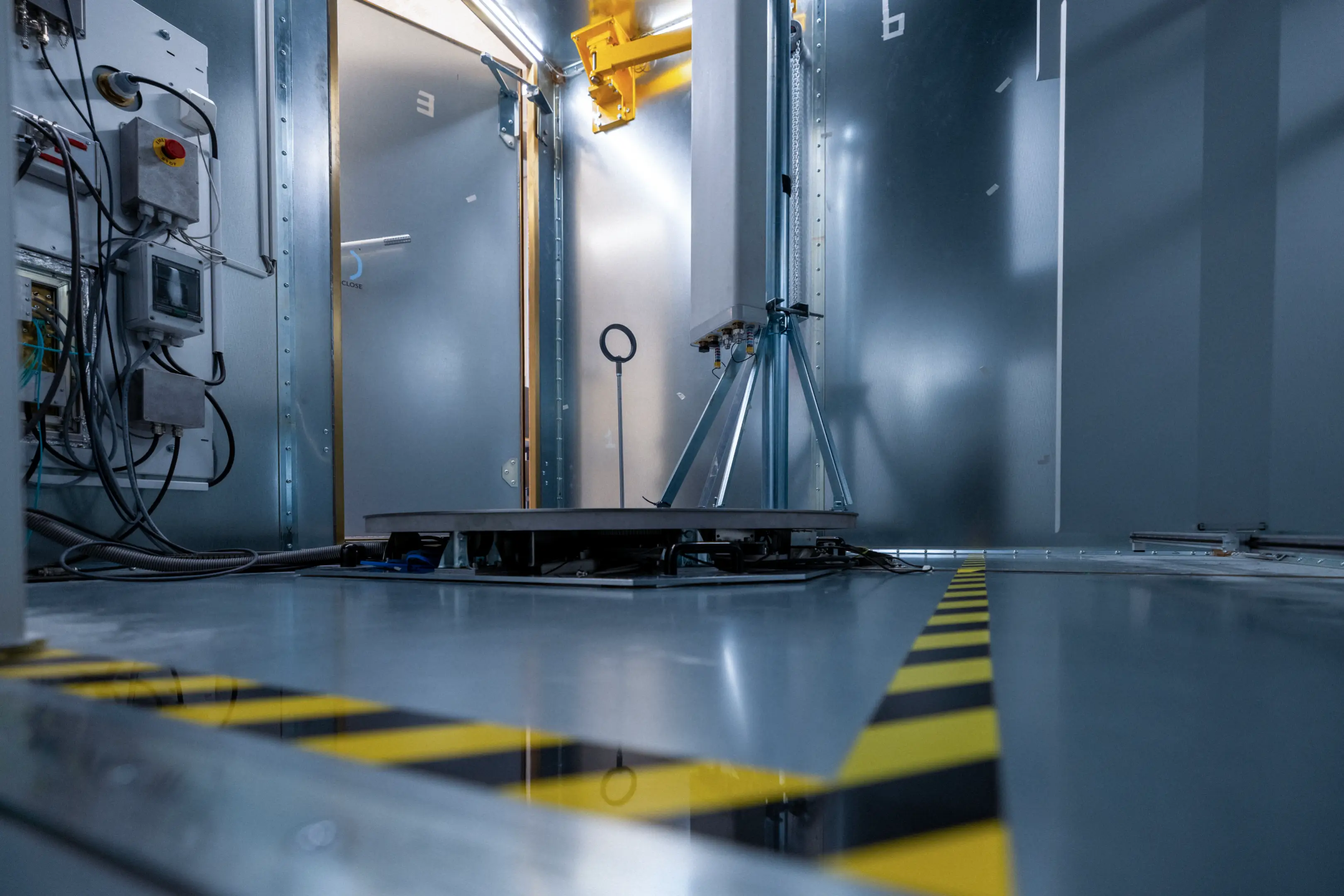
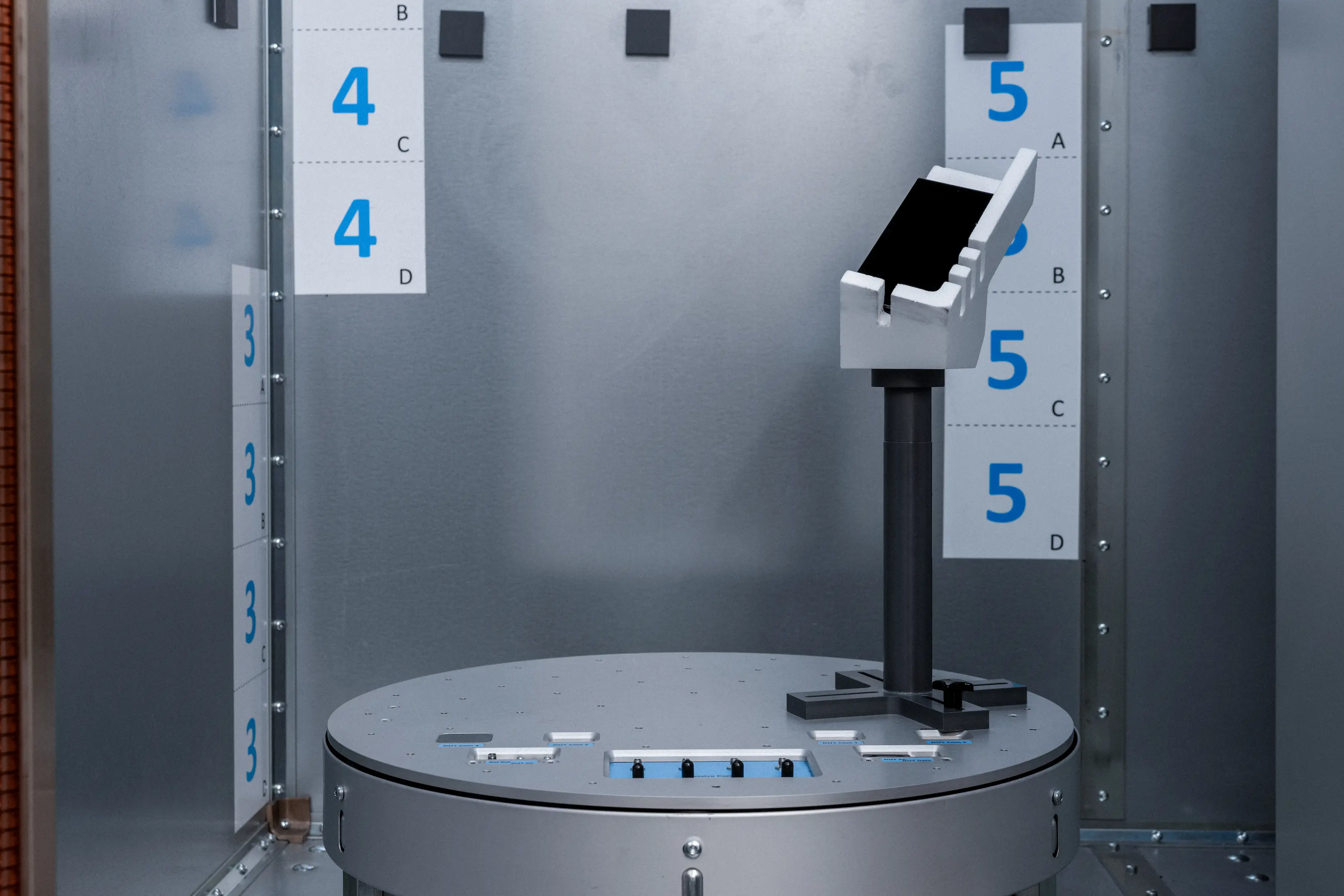
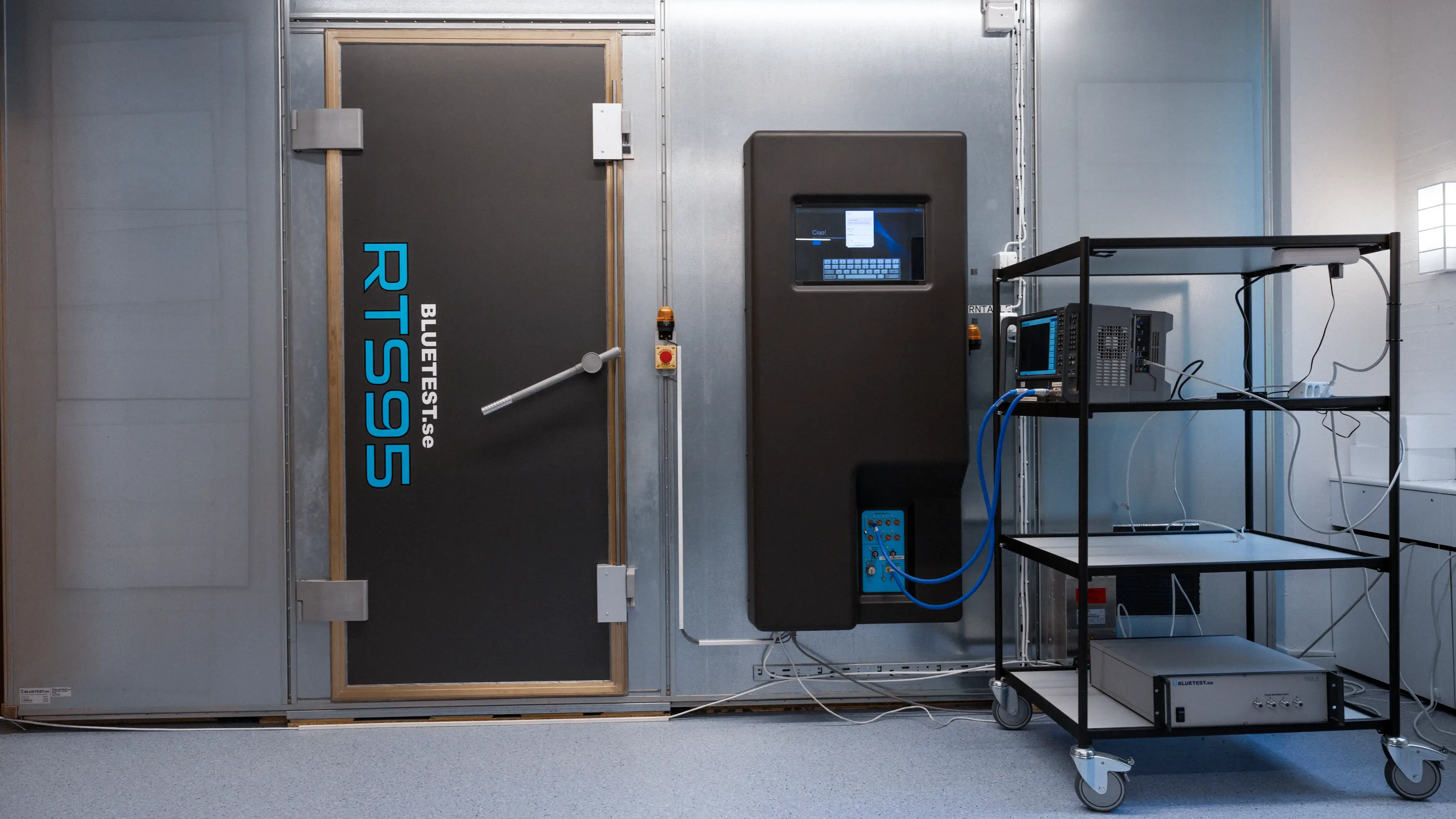
Both reverberation chambers (RC) and anechoic chambers (AC) are part of the OTA toolbox. In practice, RC is a strong fit for TRP-based RF metrics like total output power, ACLR, and spurious emissions, while anechoic/CATR is used when you also need directivity information like EIRP/EIS. Bluetest’s base station solution for this TRP-focused scope is RTS85HP, designed to meet industry expectations for speed, uncertainty control, and scalability in the 5G era.
Both reverberation chambers (RC) and anechoic chambers (AC) are part of the OTA toolbox. In practice, RC is a strong fit for TRP-based RF metrics like total output power, ACLR, and spurious emissions, while anechoic/CATR is used when you also need directivity information like EIRP/EIS. Bluetest’s base station solution for this TRP-focused scope is RTS85HP, designed to meet industry expectations for speed, uncertainty control, and scalability in the 5G era.
Tell us your test scope, we’ll recommend the chamber setup.
Base station type, frequency range (FR1/FR2), required metrics, and throughput targets all affect the most cost-effective test system. We’ll help you map your OTA scope to the right chamber configuration, with speed and “cost per test case” in mind.
Talk to sales




%202.png)


Company
Bluetest is a pioneer in wireless test solutions through innovative application of the reverberation chamber technology.
Read more about us.
Read more about us.
Social Media